
How Florida's Three Layers of Identity Verification Protect Your Notarized Documents From Fraud
How Florida's Three Layers of Identity Verification Protect Your Notarized Documents From Fraud
Here's a question that keeps attorneys and business owners up at night in 2026: how do you know the person signing your documents is actually who they claim to be?
It's not a hypothetical concern anymore. AI-generated deepfakes are getting disturbingly convincing. Synthetic identity fraud costs businesses billions every year. And when you're dealing with real estate closings, legal agreements, or any document that carries real financial weight, a single compromised signature can unravel an entire transaction.
The good news? Florida's Remote Online Notarization (RON) framework has built-in protections that most people don't fully understand. There are three distinct layers of identity verification available, and when a notary actually knows how to use them (not just check a box), they create a wall of protection that's extremely difficult to breach.
Here's what you need to know about each layer, when they come into play, and why this matters more than ever for your business.
The Identity Crisis Facing Legal Documents in 2026
Let's be honest about where we are right now. The days when a simple visual check of a driver's license was enough to confirm someone's identity are behind us. Sophisticated fraud rings can produce convincing fake IDs. AI tools can generate realistic faces and even mimic voices. The threat landscape has changed dramatically, and the verification methods protecting your documents need to keep pace.
For anyone involved in real estate transactions, estate planning, business agreements, or legal proceedings in Florida, this isn't abstract. If someone fraudulently signs a document that transfers property, creates a lien, or binds a party to a contract, the fallout is messy, expensive, and time-consuming to unwind.
Florida recognized this early. The state's RON laws allow notaries to perform notarizations via secure audio-video sessions, but the real strength of the system lies in its multi-layered approach to proving someone is who they say they are. Most people think of online notarization as a convenience play. It is convenient, sure. But more importantly, it's actually more secure than traditional in-person notarization when the notary understands and properly deploys all three verification layers.
It's coming of age where people are requesting additional verification. And the demand for stronger identity checks is only going to streamline further as more industries adopt similar frameworks. Think about it: banks already use Know Your Customer (KYC) processes, auto lenders verify identity before financing, and even some AI platforms are exploring identity verification requirements. Notarization is right at the front of this wave.
Layer One: Government-Issued ID Upload and Credential Analysis
The first layer of identity verification in Florida RON is the most straightforward, but don't let that fool you into thinking it's simple. Before a notarization session even begins, the signer must upload a valid government-issued identification document. This typically means a driver's license, state ID, or passport.
What Actually Happens During ID Upload
This isn't someone holding up their license to a webcam and hoping for the best. The RON platform's technology analyzes the document itself. It checks for security features embedded in the ID, examines formatting consistency, and cross-references the document against known templates for that issuing authority. If the ID looks altered, expired, or doesn't match the expected format for, say, a Florida driver's license issued in 2024, the system flags it.
The platform also extracts data from the ID (name, date of birth, address, ID number) and stores it as part of the notarization record. This creates a digital audit trail that simply doesn't exist with a traditional in-person notarization where a notary glances at your license and moves on.
Why This Layer Matters More Than You Think
In a traditional mobile notarization or in-person signing, the notary is relying on their own eyes and judgment to determine if an ID looks legitimate. That's a lot of pressure on one person, especially when high-quality fake IDs are more accessible than ever. The digital credential analysis adds a technological check that catches things the human eye might miss.
That said, this layer alone isn't enough. A stolen but legitimate ID would pass credential analysis with flying colors. That's exactly why Florida's framework doesn't stop here.
Layer Two: Knowledge-Based Authentication (KBA) and Why It's a Real Test
The second verification layer is Knowledge-Based Authentication, or KBA. This is where things get interesting, and where a lot of signers get caught off guard if they're not prepared.
KBA works by pulling questions from public records, credit bureau data, and other verified databases. These aren't generic security questions like "What's your mother's maiden name?" that someone could find on social media. These are deeply specific, time-sensitive questions drawn from your personal history.
The Questions That Trip People Up
KBA questions might ask about a previous address you lived at over a decade ago, a car you financed in 2012, or which of four listed people is a known associate. The system generates these questions dynamically, meaning each session produces different questions, and there's a strict time limit to answer them.
Then it's a psychological exam. They really got to think about where was I living 15 years ago. That's not an exaggeration. The questions are designed to be answerable only by the actual person whose identity is being verified. Someone who stole your driver's license or even obtained your Social Security number would struggle to answer questions about the specific street you lived on in 2011 or the lender who held your auto loan seven years ago.
How KBA Fits Into the Verification Flow
In a typical Florida RON session, KBA kicks in as a secondary verification after the ID has been uploaded and analyzed. The signer must correctly answer a minimum number of questions (usually three out of five) within the allotted time. Fail, and the notarization doesn't happen. Period.
This is where working with an experienced notary makes a real difference. When someone struggles with KBA (and it happens more often than you'd think, especially with older signers or people who have moved frequently), a knowledgeable notary knows how to manage the situation professionally. Sometimes it means pausing, walking the signer through what to expect, or rescheduling if they need to gather their thoughts. What it never means is bypassing the process.
KBA's Strengths and Limitations
KBA is powerful because it tests knowledge that only the real person should have. But it's not perfect. People with thin credit histories or limited public records may not generate enough questions. Younger signers who haven't established extensive financial histories sometimes have trouble. And occasionally, the questions themselves can be confusing; was that your address in 2010 or 2011?
These limitations are exactly why Florida offers a third layer that takes verification into entirely different territory.
Layer Three: Biometric Verification and the Future of Fraud Prevention
This is where Florida's RON framework really separates itself. In the state of Florida, we can do biometrics with online notarization, which is a big advantage. It defeats a lot of fraud attempts that might slip through other verification methods.
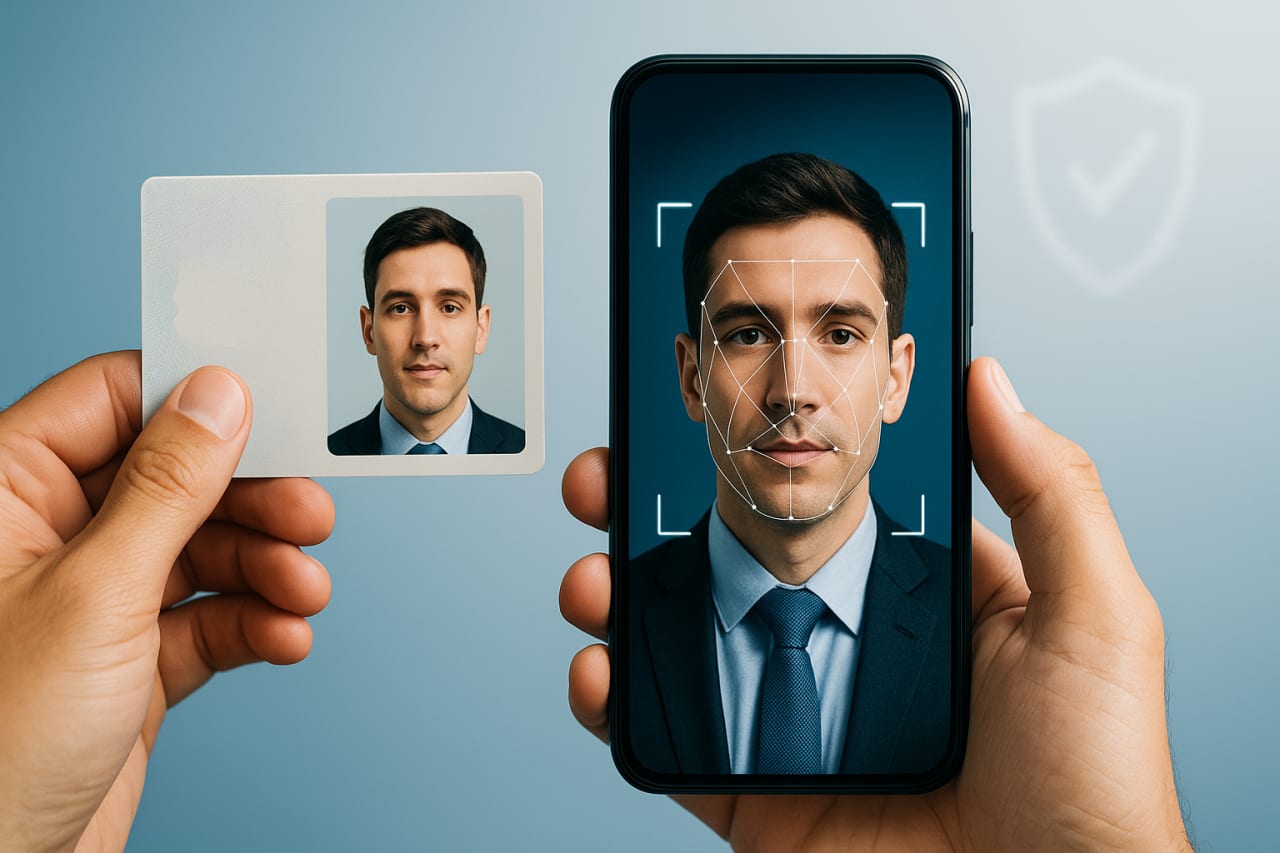
Biometric verification uses facial recognition technology to compare the signer's live appearance during the video session against the photo on their uploaded government ID. The system analyzes facial geometry, proportions, and other biometric markers to determine whether the person on camera matches the person on the ID.
How Biometric Verification Works in Practice
During the RON session, the platform captures the signer's face via the video feed and runs it against the ID photo. This happens in real time, and the results are recorded as part of the session's permanent audit trail. It's a technological verification that goes far beyond a notary squinting at a small ID photo and saying, "Yeah, that looks like you."
The beauty of biometrics is that it addresses the weakness of both previous layers. A stolen ID passes credential analysis but fails biometric matching because the thief's face doesn't match the photo. A fraudster who somehow knows enough personal history to pass KBA still can't change their facial geometry to match someone else's ID.
The Real-World Quirks of Biometric Matching
Now, biometrics aren't flawless, and being honest about that matters. The only drawback on the biometric side is practical: if you have a beard in your ID and you don't have a beard anymore, it may not completely recognize you. The same goes for significant changes in hair color, weight, or other appearance factors. One recent case involved a signer whose ID showed black hair, but he now had white hair. The system hesitated.
This is where experience as a notary comes in. When biometric matching runs into trouble because of appearance changes, a skilled notary knows how to pivot. The solution isn't to skip verification altogether. Instead, you shift to KBA as the backup verification method, layering the tests until you've established identity with confidence. It takes more time, but it ensures the integrity of the document.
Why Biometrics Matter in the Age of Deepfakes
The deepfake conversation is relevant here. In 2026, AI can generate convincing video of people who don't exist or impersonate people who do. But current biometric systems in RON platforms are designed to detect liveness, meaning they're checking for signs that the person on camera is a real, present human being, not a pre-recorded video or AI-generated face.
Is this technology perfect? No. But combined with credential analysis and KBA, it creates a verification stack that's extremely difficult to defeat. A fraudster would need a convincing fake ID that passes digital analysis, enough personal knowledge to pass KBA questions about someone else's life history, and a face that matches the ID photo closely enough to fool biometric matching. That's a tall order.
Why Most Notarizations Don't Actually Use All Three Layers
Here's something most people don't realize: not every RON session in Florida triggers all three verification layers. The specific combination depends on the platform, the type of document, and the requirements set by the parties involved (lenders, title companies, attorneys, etc.).
In many standard notarizations, ID upload plus KBA is the default. Biometric verification is available but may not be required for every transaction. Some title companies and law firms are now explicitly requesting biometric verification for high-value transactions, and that trend is accelerating.
When to Request Enhanced Verification
If you're an attorney, real estate professional, or business owner who regularly needs documents notarized, here's the practical takeaway: you can and should request the level of verification that matches the risk level of your transaction.
A routine acknowledgment on a low-stakes business document? Standard ID upload and KBA are probably fine. A real estate closing involving hundreds of thousands of dollars? A power of attorney that gives someone control over financial assets? You want every layer of verification available, including biometrics.
The problem is that many notaries treat verification as a checkbox. They run through the minimum requirements because it's faster and easier. That's fine until something goes wrong, and then everyone wishes they'd taken the extra five minutes to add another layer of security.
What This Means for Attorneys and Real Estate Professionals
If you're relying on notarized documents as part of your business (and if you're reading this, you probably are), here's why understanding these verification layers matters to you directly.
Protecting Your Transactions
Every notarized document in a Florida RON session is recorded via audio and video, creating a permanent record. Combined with multi-layer identity verification, this means you have documented proof that the signer was verified through credential analysis, knowledge-based authentication, and potentially biometric matching. If that signature is ever challenged in court, you have a verification trail that's far more robust than "the notary checked their ID."
Reducing Your Liability
For attorneys facilitating closings or overseeing document execution, the strength of the identity verification process directly impacts your exposure. If a fraudulent signature slips through a notarization that used only basic verification, questions will be asked about why stronger measures weren't employed when they were available.
Setting Client Expectations
Clients sometimes get frustrated with verification processes. KBA questions can be tricky. Biometric matching can be fussy. But when you explain that these measures protect them from someone impersonating them and fraudulently signing documents in their name, the frustration usually turns to appreciation. Frame verification as protection, not inconvenience.
What To Do Now
Whether you're an attorney, a real estate investor, a property manager, or a business owner, here's how to put this information to work.
This Week
- Review your current notarization process. Are you using a notary who offers Florida RON with all three verification layers? If you're still relying exclusively on mobile or in-person notarization, you may be missing out on stronger protections.
- Assess your risk profile. Identify which of your regular document types carry the highest financial or legal stakes. These are the ones that should get the full verification treatment.
This Month
- Talk to your notary about verification options. Ask specifically whether they offer biometric verification for RON sessions. Not all notaries in Florida use platforms that support it, and not all notaries know how to properly manage the process when hiccups arise.
- Update your internal procedures. If you're a law firm or real estate office, consider creating a policy that specifies minimum verification requirements based on transaction value or document type.
- Brief your clients. Let signers know in advance that they'll need a current government-issued ID and should be prepared for identity verification questions about their personal history. A quick heads-up prevents frustration during the session.
This Quarter
- Audit your document security end to end. Identity verification at the notarization stage is critical, but it's one piece of the puzzle. Review how documents are transmitted, stored, and accessed throughout your workflow.
- Stay current on Florida's evolving RON regulations. The state continues to refine its framework, and new requirements or capabilities may affect how you handle notarized documents.
- Build a relationship with a notary who understands verification. The difference between a notary who treats identity verification as a checkbox and one who understands when to deploy biometrics, how to troubleshoot KBA issues, and how to manage the process professionally is enormous. That relationship pays dividends when a complicated signing comes up.
The Bottom Line
Florida's RON framework gives you three powerful layers of identity verification: credential analysis, knowledge-based authentication, and biometric matching. In an era of deepfakes and synthetic identity fraud, using a notary who understands how to deploy all three layers (and knows when each is appropriate) is one of the smartest moves you can make to protect your transactions. Verification isn't a hassle; it's your safety net.
Need a notary in South Florida who takes identity verification seriously and knows how to use every tool available? Reach out to Headley Legal Support Services. We'll make sure your documents are verified, secure, and done right.