
Why Detailed Process Server Notes Are Your Best Defense Against a Motion to Quash in Florida
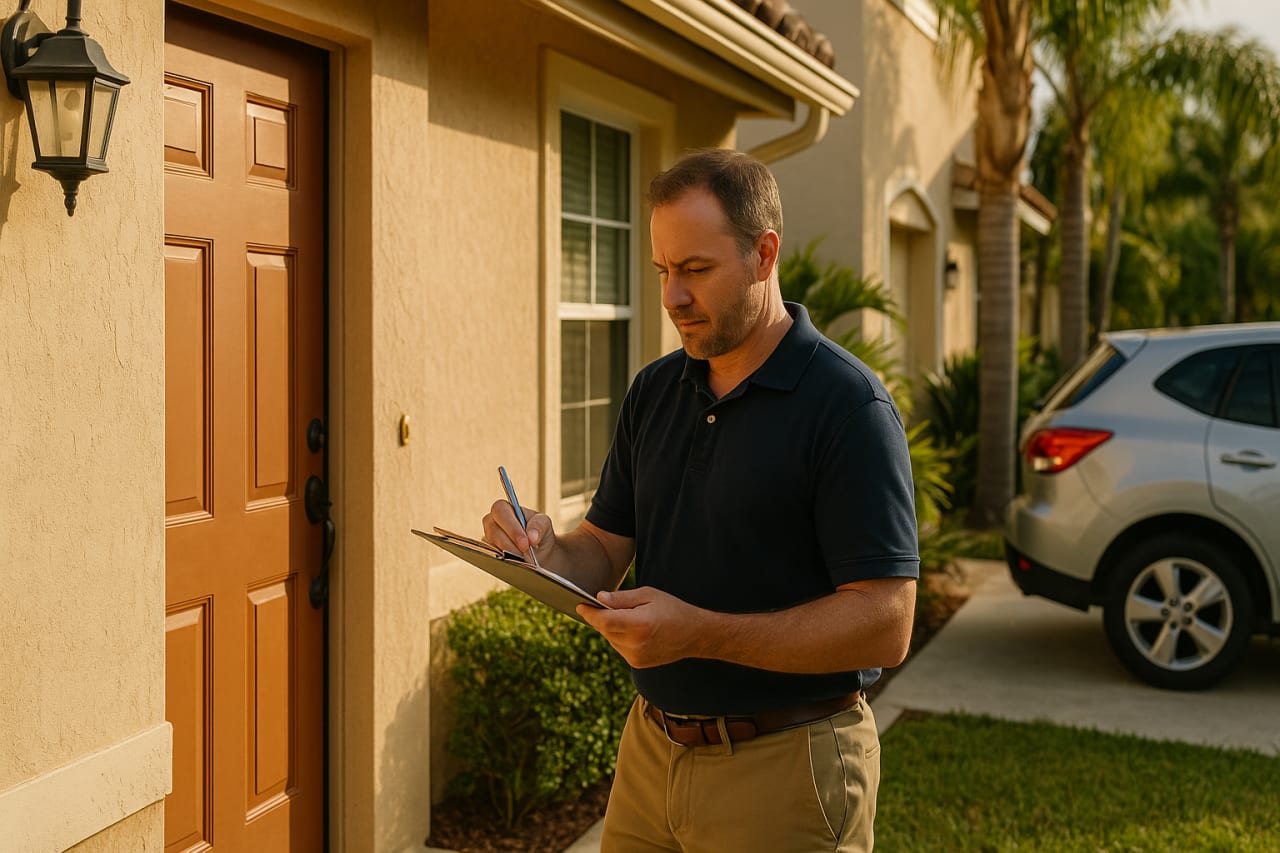
Why Detailed Process Server Notes Are Your Best Defense Against a Motion to Quash in Florida
You just spent weeks tracking down a defendant, your process server finally affected service, and the lawsuit is moving forward. Then a motion to quash lands on your desk. The defendant claims they were never properly served, and suddenly your entire case timeline is at risk. The judge looks at the return of service, sees a generic note that reads "no answer at the door," and now you have a real problem.
This scenario plays out in Florida courtrooms more often than most attorneys want to admit. And in nearly every case, the outcome hinges on one thing: how detailed the process server's notes were at the time of service.
Here's what you need to know about why "shoelace-level detail" in process server documentation isn't just a nice-to-have, it's the single most effective weapon against a motion to quash, and how to make sure your service of process holds up when it matters most.
The Shoelace-Level Detail Philosophy
Growing up around the legal profession shapes how you see the world. My father was an attorney back in his day. And whenever he would tell a story, it was very detailed. I joke to the point where he would get down to the colors of the shoelaces.
That kind of obsessive attention to detail might sound excessive in casual conversation, but in process serving, it's the difference between service that sticks and service that gets thrown out. The philosophy is simple: if you were standing on someone's doorstep, you should be able to recall that moment with enough specificity that a judge believes you were actually there.
Most process servers don't think about their notes this way. They treat documentation as a chore, something to check off before moving on to the next address. But every single note a process server writes is a potential piece of courtroom testimony. Every detail they skip is a gap that a defense attorney will try to exploit.
This isn't about being paranoid. It's about being professional. When you understand that your notes may need to hold up under cross-examination months or even years after the fact, your entire approach to documentation changes. You stop writing for yourself and start writing for the judge.
What a Lazy Service Attempt Note Looks Like (And Why It Fails)
Let's start with the problem. Here's what a typical, bare-minimum process server note looks like:
Attempt 14/15/2026, 2:15 PM: No answer at the door.
Attempt 24/17/2026, 6:30 PM: No answer at the door. No lights on.
Attempt 34/19/2026, 9:00 AM: No answer at the door. No motion detected.
On the surface, these notes check the basic boxes. They show three attempts at different times of day. They indicate the server was physically present. But here's the problem: they prove almost nothing.
A defense attorney filing a motion to quash will argue that these notes are so generic they could apply to any address in the state of Florida. There's no evidence the server was at the correct location. There's no detail that would distinguish this property from the house next door. And there's certainly nothing that would help the process server recall the specifics if they're subpoenaed to testify six months later.
The Three Problems with Generic Notes
- They don't establish location credibility. Without property-specific details, there's no proof the server went to the right address.
- They don't support the server's memory. When a process server gets called into court, vague notes make it nearly impossible to testify with confidence.
- They invite judicial skepticism. Judges see these boilerplate notes constantly, and many have grown wary of servers who can't provide any detail beyond "no answer at the door."
The standard "no answer at the door" note is the process serving equivalent of a doctor writing "patient seemed sick" in a medical chart. It technically documents something, but it's functionally useless when scrutinized.
What a Bulletproof Service Attempt Note Actually Looks Like
Now let's look at the same three attempts documented by a process server who understands what's at stake:
Attempt 14/15/2026, 2:15 PM: Arrived at single-story beige stucco residence. Brown front door with brass knocker. Landscaping well-maintained, hedges recently trimmed. Silver Honda Accord in driveway (partial plate: FL tag beginning with "J"). Knocked on front door, no answer. Doorbell appeared non-functional. No audible movement inside. Left area at 2:22 PM.
Attempt 24/17/2026, 6:30 PM: Returned to same beige stucco residence. No vehicles in driveway. Front porch light off. Interior lights not visible through front windows (blinds drawn). Knocked firmly on brown front door. No answer. Noticed package from Amazon on doorstep that was not present during Attempt 1. Left area at 6:37 PM.
Attempt 34/19/2026, 9:00 AM (Saturday): Returned to same residence. Silver Honda Accord back in driveway. Amazon package no longer on porch. Knocked on front door. Heard movement inside, sounded like footsteps. No one came to the door after approximately 2 minutes of waiting. Knocked again and announced purpose. No response. Left area at 9:10 PM.
Why This Level of Detail Matters
The difference is night and day, and here's why each element matters:
- Property description (beige stucco, brown door, brass knocker): Confirms the server was at the correct location and can identify it.
- Landscaping condition: Establishes the property was occupied and maintained, relevant if the defendant later claims they weren't living there.
- Vehicle details: Creates a pattern showing someone was using the property. The car present on Attempts 1 and 3 but absent on Attempt 2 suggests an occupant's schedule.
- Package observations: The Amazon package appearing and then disappearing proves someone was actively retrieving items from the property between attempts.
- Sounds of movement: On the third attempt, the server heard footsteps. This is critical evidence that someone was home and potentially avoiding service.
Don't just give the standard no answer at the door. Give me what color was the door? Was the landscaping kept? Were there any cars in the driveway?
This is the standard we hold our process servers to. You want to make sure you're thinking on the client side. What would they be asking you if they called you up? And hopefully you know those answers.
How a Motion to Quash Works in Florida, And Where Weak Notes Get Exposed
To understand why documentation matters so much, you need to understand what actually happens when a defendant files a motion to quash service of process in Florida.
A motion to quash is essentially the defendant telling the court: "I was never properly served, and therefore this court doesn't have jurisdiction over me." If the judge grants the motion, the service is invalidated. Your client has to start over, re-serving the defendant, losing weeks or months of time, and potentially giving the defendant an opportunity to disappear.
Common Grounds for a Motion to Quash
Defendants (and their attorneys) typically argue one or more of the following:
- "I was never served." The defendant claims the process server never came to their address, or served the wrong person.
- "I wasn't served properly." The defendant argues the server didn't follow Florida's statutory requirements, for example, they simply dropped papers without properly identifying themselves or the nature of the documents.
- "The server left papers at the wrong address." The defendant claims the service location wasn't their residence or place of business.
- "The person who accepted service wasn't authorized." In substitute service situations, the defendant argues that the person who received the documents didn't qualify under Florida law.
A motion to quash can come from anybody. It could be someone who's genuinely trying to delay the proceedings or someone who wants to get out of it entirely. There's no single case type where it's more common, it's an across-the-board tactic.
What Happens When It Reaches the Judge
The burden initially falls on the defendant to show improper service, but as a practical matter, the judge is going to scrutinize the process server's return of service and any supporting documentation. If your notes are generic and your server can't recall details, the judge has nothing to rely on but a form affidavit. That's a shaky foundation.
On the other hand, when your return of service is backed by detailed attempt notes that describe the specific property, vehicles, sounds, and environmental conditions, the defendant's claim that "the server was never there" starts to collapse under the weight of specifics.
What Happens When a Process Server Gets Subpoenaed
Here's something most law firms don't think about until it happens: your process server can be subpoenaed to testify in support of the service. And when that day comes, the quality of their original notes becomes everything.
This is not a hypothetical situation. It happens. Process servers get called into court to testify about motions to quash, and the experience is entirely shaped by the documentation they created at the time of service.
The Courtroom Reality
When a process server takes the stand, the defense attorney's job is to create doubt. They'll ask questions like:
- "Can you describe the property where you made service?"
- "How do you know you were at the correct address?"
- "Did you see the defendant, or did you hand papers to someone else?"
- "How many services did you make that week? How can you be sure you're not confusing this one with another?"
If the process server's notes say "no answer at the door" across three attempts with no additional detail, those questions become incredibly difficult to answer. The server is relying entirely on memory, memory that may be six months or a year old, covering one address out of hundreds they've visited since.
If I get subpoenaed, I will drive by that address to jog my memory. And if I do remember, then I will say, yeah.
That's the reality of courtroom testimony as a process server. Sometimes you need to physically revisit the location to recall the details. But here's the key: you can only recall details you actually observed and documented in the first place. Driving by an address doesn't help if you never noticed anything specific about it.
How Detailed Notes Save Testimony
When a process server has thorough notes, the courtroom dynamic shifts completely. They can testify confidently: "Yes, I was at that address. It was a beige stucco single-story home with a brown front door. On my first attempt, there was a silver Honda Accord in the driveway. On my third attempt, I heard footsteps inside after knocking."
That level of specificity is nearly impossible to fabricate and extremely difficult to challenge. It demonstrates the server was genuinely present, genuinely observant, and genuinely following proper procedure. The testimony essentially tells the judge: this person was at the right place, at the times documented, and followed the process correctly.
The process server can even identify the defendant in the courtroom if they remember who they served. That kind of testimony makes a motion to quash functionally impossible to win.
The Diligent Search Standard in Florida
Florida law requires a diligent search and inquiry before resorting to alternative methods of service like constructive service (service by publication). But even for standard personal service, the principle of diligence applies to how courts evaluate whether service was properly conducted.
A diligent search for residential service means making attempts at varied times of day, morning, afternoon, and evening, to maximize the likelihood of catching the defendant at home. In Florida, Saturday attempts are permitted, but Sunday attempts are not allowed unless specifically court-ordered.
What a Proper Attempt Schedule Looks Like
A well-documented service effort typically spans one to two weeks and includes:
- Morning attempt (7:00 AM - 10:00 AM): Catches people before they leave for work
- Afternoon attempt (12:00 PM - 3:00 PM): Targets people who work non-traditional schedules
- Evening attempt (5:00 PM - 8:00 PM): The most common time to find someone home after work
- Saturday attempt: Provides an additional opportunity when people are typically home for the weekend
Process servers typically attempt service every 48 to 72 hours, cycling through different times of day. If personal service can't be affected within one to two weeks, it may be time to explore additional options, including running a skip trace to verify the address is correct or identify alternative locations.
The key takeaway is that each of these attempts needs to be documented with the same level of detail we've been discussing. A judge evaluating your diligent search doesn't just want to see that you tried multiple times. They want to see evidence that those attempts were genuine, strategic, and thorough.
Drop Service and Other Pitfalls to Avoid
One of the most common issues that leads to a successful motion to quash is what's known as "drop service", where a process server sees the defendant through a window, can't get them to open the door, and simply leaves the papers on the doorstep or slips them under the door.
Technically, that's not good service under Florida law. If the process server recognizes the defendant and the defendant is refusing to open the door, the server needs to verbally identify themselves, state their purpose, and announce the nature of the documents. If they do all of that and the defendant still refuses to open the door, then leaving the papers may be acceptable as a form of service, but only with proper documentation of every step.
The process server has to state who they are, what they're doing there, and the basic details of the case: "I have a summons and complaint for you. This is in reference to John Doe versus Jane Doe." Skip that step, and you've handed the defense a motion to quash on a silver platter.
What To Do Now
Whether you're a law firm relying on process servers, a landlord navigating evictions, or a legal support company managing a team of servers, here's how to tighten up your documentation starting today.
This Week
- Audit your last 10 returns of service. Pull your most recent filings and read the attempt notes critically. Are they specific enough to survive a motion to quash? Could your server testify based on those notes alone?
- Create a documentation checklist. Build a simple reference card for your process servers that includes prompts: door color, landscaping condition, vehicles present, sounds heard, time arrived, time departed.
- Require timestamps on arrival and departure. Knowing the server spent 5-7 minutes at a location is far more credible than a single timestamp.
This Month
- Train or retrain your process servers on detail standards. Walk them through the difference between a generic note and a bulletproof note using real examples. Make it clear that their notes are potential courtroom testimony.
- Implement photo documentation where appropriate. GPS-stamped and time-stamped photographs of the property during each attempt create an additional layer of evidence that's nearly impossible to dispute.
- Review your attempt scheduling. Make sure your servers are varying their attempt times (morning, afternoon, evening, Saturday) and documenting the strategic reasoning behind each visit.
This Quarter
- Build a quality review process. Designate someone to review attempt notes before the return of service is filed. Catch vague or generic documentation before it becomes a permanent court record.
- Establish a skip trace escalation protocol. If service can't be affected within one to two weeks, have a clear process for initiating a skip trace to verify the address or identify alternatives, rather than continuing to bang on the wrong door.
- Track motion to quash outcomes. If you're seeing motions to quash on your cases, analyze whether documentation gaps contributed. Use those cases as training opportunities.
The Bottom Line
A motion to quash lives and dies on the details your process server captured at the time of service. Generic notes like "no answer at the door" leave your service vulnerable to challenge, while shoelace-level detail, property descriptions, vehicle information, environmental observations, creates documentation that holds up in court and supports confident testimony. The investment in better documentation is minimal; the cost of getting it wrong is your entire case timeline.
Need process service in Florida that's documented to withstand any challenge? At Headley Legal Support Services, we train our team to deliver shoelace-level detail on every single attempt. Contact us today to discuss your service of process needs and see the difference thorough documentation makes.