
Why Your Attorney Should Be on the Call During Remote Online Notarization Closings
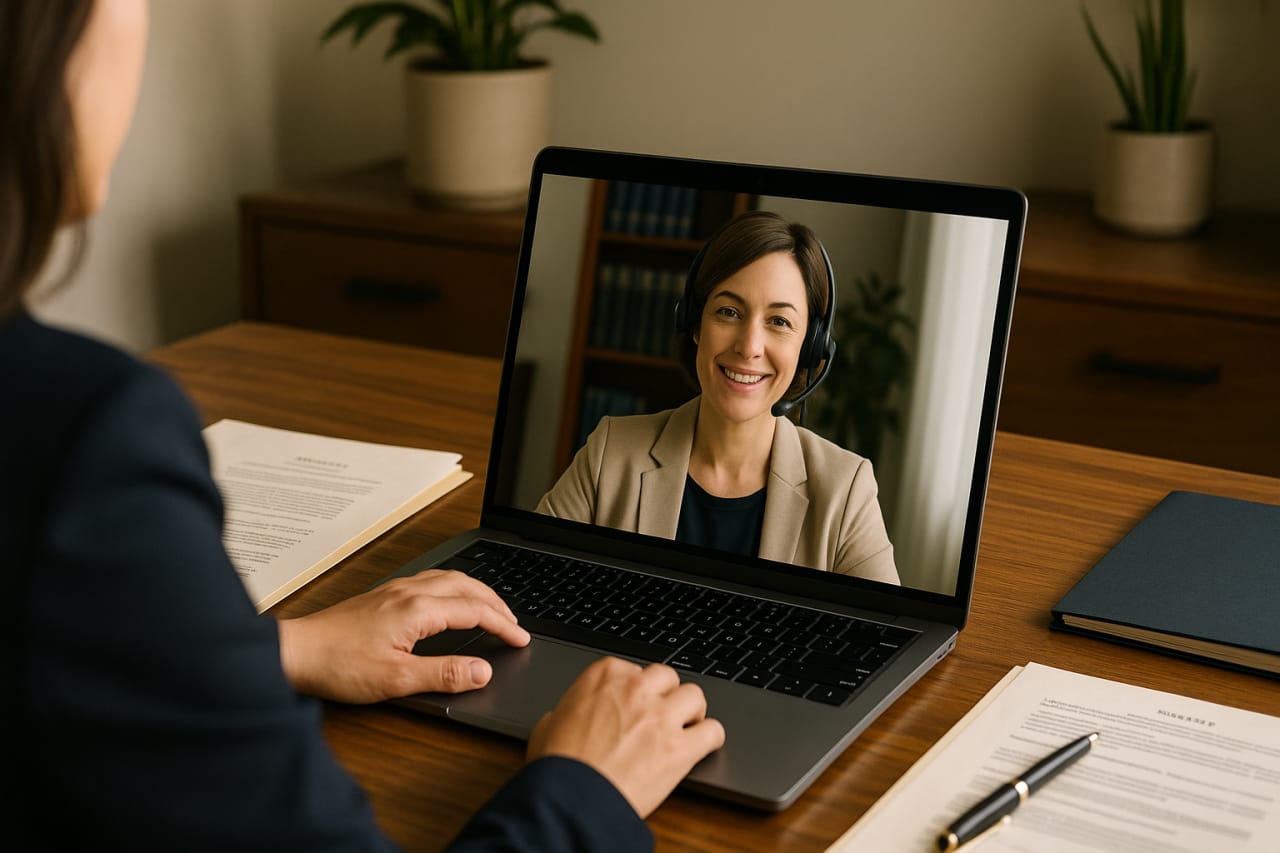
Why Your Attorney Should Be on the Call During Remote Online Notarization Closings
Here's a question that should keep Florida attorneys up at night: when your client is sitting in front of their screen during a remote online notarization closing, who's there to answer their questions about the documents they're about to sign?
If the answer is "the notary," you have a problem. If the answer is "nobody," you have a bigger one.
Remote online notarization (RON) has changed the game for real estate closings, estate documents, and legal signings across Florida. Clients love the convenience. Attorneys love the efficiency. But somewhere along the way, a dangerous habit crept in: attorneys started treating RON sessions like something they could just hand off to the notary and walk away from. No review call with the client beforehand. No presence on the video session. No availability if something goes sideways with the documents.
The result? Errors go uncaught. Signings get postponed. Clients lose confidence. And everyone wastes time and money that could have been avoided with one simple step: the attorney showing up.
Here's what you need to know about why attorney presence during RON closings isn't optional, and what a properly run remote notarization session actually looks like.
The Problem with Absent Attorneys in RON Sessions
Let me be direct about something. Nine out of ten times, real estate documents come through just fine. Everything's where it should be, the notary blocks are in place, the signature lines are correct, and the closing goes smoothly. But it's that one time out of ten that creates real problems, and when the attorney who prepared the documents isn't on the call, those problems multiply fast.
I've seen it firsthand more times than I should have. An attorney sends over documents for a remote notarization, the client logs into the session, and within the first few minutes there's a question about a clause, a discrepancy in a name spelling, or an error in the property description. The client looks at the notary expecting answers, and the notary is stuck in an impossible position.
When the Notary Becomes the Scapegoat
Here's the thing most attorneys don't think about: if the notary isn't the one who generated the documents, the notary shouldn't be the one explaining them. Period. When I trained as a loan signing agent years ago, the curriculum tried to teach notaries how to interpret every document and explain it to signers. In theory, that sounds helpful. In practice, it's a liability nightmare.
If I'm not the one generating the documents, I'd rather the person generating the documents, like an attorney, be the one on the call. Because if there is a question, if there is an error, at least I'm not the one saying, "Hey, we've got to postpone this signing." And I have had to postpone signings in the past because of exactly this situation.
When a notary catches an error during a session and the attorney isn't available, the entire closing grinds to a halt. The client is frustrated. The notary has to reschedule. The attorney gets a call after the fact asking why their documents weren't right. Nobody wins.
Documents That Arrive Incomplete
You'd think an attorney sending documents for notarization would double-check that the basics are covered. You'd be wrong more often than you'd expect.
Just a few weeks ago, I had an attorney reach out saying he needed my expertise for a notarization. No problem. I told him to send over the documents. When I opened the file, the document needed to be notarized, but there was no notary block anywhere on it. No signature line either. I sent it back and told him it needed to be fixed.
I still haven't heard back.
Now, some attorneys might expect the notary to just add the notary block and fix the formatting. But that's not how this works. If I fix your document and you have a problem with my correction, we've got an even bigger mess. The attorney who prepared the document should have complete control over it. That means reviewing it before it goes out, making sure the notary block is present, confirming all signature lines are in the right places, and being available during the session to address anything that comes up.
Why Attorney Presence Matters More with RON Than Traditional Closings
With a traditional in-person closing, there's usually a built-in safety net. The signing might take place at the attorney's office. There's a paralegal in the room. Someone can run down the hall and get a quick answer if something looks off. Remote online notarization removes all of those informal checkpoints.
The Digital Distance Problem
During a RON session, the client is typically at home or in their office. The notary is on the other end of a video call. The attorney, if they're following best practices, should be on that call too. But when the attorney skips the session entirely, the client is essentially signing important legal documents with no one available to explain what they're agreeing to.
This isn't just a customer service issue. It's a risk management issue. Consider what's at stake in a typical Florida real estate closing:
- Property transfers worth hundreds of thousands (or millions) of dollars
- Lien releases and reconveyance documents that affect clear title
- Trust documents that determine how assets are managed and distributed
- Mortgage agreements with terms that will bind the signer for decades
When a client signs these documents without understanding them, and without the attorney present to answer questions in real time, you're creating exposure for malpractice claims, title disputes, and client complaints down the road.
The Verification Layer
Florida's RON process already includes robust identity verification. Signers go through knowledge-based authentication (KBA), and in Florida, we can also use biometric verification. They upload a government-issued ID, whether that's a driver's license, passport, or another federal ID. The notary verifies that the person on screen matches the person in the documents.
But identity verification and document review are two completely different things. The notary confirms who is signing. The attorney should confirm what they're signing is correct. When attorneys remove themselves from that equation, the verification process is only doing half its job.
What "Doing It Right" Actually Looks Like
A properly run remote online notarization session for a real estate closing or legal document signing involves coordination between three parties: the attorney (or document preparer), the notary, and the signer. Here's what that looks like when it's done correctly.
Before the Session
The attorney should:
- Review all documents for accuracy, including names, dates, property descriptions, and legal terms
- Confirm that every document requiring notarization has a proper notary block
- Verify that all signature lines are present and correctly placed
- Schedule a pre-signing review with the client to walk through the documents and answer questions
- Confirm availability for the RON session itself
The notary should:
- Receive documents with enough lead time to review formatting and notary requirements
- Confirm that the platform is set up and the signer has been sent access credentials
- Verify that the signer has a valid government-issued ID for the verification process
- Coordinate timing with both the attorney and the client
During the Session
This is where attorney presence makes the biggest difference. When the attorney is on the call:
- Questions get answered immediately. The client asks about a clause, and the attorney explains it in real time. No delays, no rescheduling.
- Errors get caught and corrected. If a name is misspelled or a date is wrong, the attorney can make the call on whether to proceed, amend, or reschedule.
- The client feels confident. Signing legal documents is stressful for most people. Having their attorney present, even virtually, provides reassurance.
- The notary can focus on notarization. Instead of trying to explain documents they didn't prepare, the notary handles identity verification, witnessing, and the notarial act itself.
After the Session
Once the signing is complete, the notary handles the recording and certification. The attorney handles follow-up with the client, filing, and any post-closing tasks. Everyone stays in their lane, and the client gets a clean, professionally handled closing.
The Real Cost of Getting It Wrong
When attorneys skip the RON session, the costs show up in ways that aren't always obvious at first.
Postponed Signings
Every postponed signing costs money. The notary's time is wasted. The client has to rearrange their schedule. If it's a real estate closing, delays can jeopardize financing timelines, rate locks, and even the deal itself. One missing notary block or incorrect legal description can push a closing back days or weeks.
Client Confidence Erosion
Your clients are trusting you with some of the most important transactions of their lives. When they show up to a RON session and their attorney isn't there, they notice. When they have a question about a document and nobody can answer it, they remember. When the signing has to be postponed because of an error the attorney should have caught, they start wondering whether they hired the right firm.
It astonishes me how often this happens. I've had this situation even with attorneys in my professional network. They don't go over anything with their clients, and they don't want to be on the call. It's a pattern that erodes trust, and clients talk to each other about their experiences.
Liability Exposure
If a client signs a document with an error because the attorney wasn't present to catch it, who bears the responsibility? The notary verified identity and witnessed the signature, which is their job. The error in the document falls squarely on whoever prepared it. And if the attorney can't demonstrate that they reviewed the documents with the client and made themselves available during the signing, that's a problem if things end up in a dispute.
What Florida Attorneys Should Look for in a Notary Partner
Not all notaries handle RON sessions the same way. If you're an attorney looking for a notary to handle your clients' remote signings, here's what separates a professional operation from a rubber-stamp service.
They Insist on Attorney Involvement
A good notary will push back if an attorney tries to send documents without being available for the session. This isn't the notary being difficult. It's the notary protecting everyone involved, including the attorney. When the document preparer is on the call, errors get resolved in real time instead of derailing the entire signing.
They Review Documents Before the Session
A professional notary reviews documents before the session starts, not to interpret legal content, but to confirm that the formatting is correct. Are the notary blocks present? Are signature lines where they need to be? Is the document set up for the RON platform? Catching these issues before the client logs on saves everyone time and frustration.
They Use Proper Verification Protocols
In Florida, remote online notarization requires identity verification through knowledge-based authentication, biometric verification, or both. A qualified notary uses these tools correctly every time. Biometrics can occasionally flag false negatives (if someone's appearance has changed significantly since their ID photo was taken), but a good notary knows how to work through those situations by switching to KBA or using other verification methods allowed under Florida law.
They Keep the Session Recorded
Florida law requires RON sessions to be recorded. A professional notary uses a platform that handles this automatically, creating an auditable record of the entire signing. This protects the attorney, the client, and the notary if questions arise later about what was signed and by whom.
What To Do Now
If you're a Florida attorney who has been handing off RON sessions without being present, here's how to fix your process.
This Week
- Audit your current RON workflow. How many of your recent remote notarization sessions did you attend? If the answer is less than all of them, you've got a gap.
- Review your document templates. Make sure every template includes a proper notary block and all necessary signature lines. Don't assume they're there; check.
- Talk to your notary. Ask them about their process for handling questions during a session when the attorney isn't present. Their answer will tell you a lot about the risk you've been running.
This Month
- Build attorney presence into your closing checklist. Make it a standard step: someone from your firm is on the RON call for every signing. It doesn't always have to be the lead attorney; a knowledgeable paralegal can cover many sessions.
- Schedule pre-signing reviews with clients. A 15-minute call before the RON session to walk through the documents eliminates most questions that would otherwise come up during the signing.
- Evaluate your notary partner. If your current notary doesn't push back when documents arrive incomplete or when you skip the session, find one who does. That's the notary who's protecting your practice.
This Quarter
- Establish a formal RON protocol for your firm. Document the process from document preparation through post-signing follow-up. Include quality checkpoints for document review, client communication, and attorney availability.
- Track postponement rates. If you're seeing signings get delayed because of document errors or unanswered client questions, that's a measurable problem with a measurable solution: be on the call.
- Build relationships with notaries who share your standards. The best RON outcomes come from attorney-notary partnerships where both parties understand their roles and hold each other accountable.
The Bottom Line
Remote online notarization is a powerful tool for Florida attorneys and their clients, but only when everyone involved does their part. When attorneys skip the session and leave their clients alone with a notary who didn't prepare the documents, errors go uncaught, signings get postponed, and client confidence takes a hit. The fix is simple: show up, review your documents before they go out, and be available to answer questions in real time.
If you're looking for a notary who insists on doing remote online notarizations the right way, with proper verification, document review, and attorney coordination, reach out to Headley Legal Support Services. We'd rather take the extra time to get it right than rush through a session that ends up costing everyone more in the long run. Contact us today to discuss your notarization needs.